We may earn a commission when you buy through links on our deal pages, at no extra cost to you. It never changes which deals we post.
A new TV is one of the biggest things most families buy during Black Friday, and it is also where store labels get the most confusing. QLED, Mini-LED, RGB Mini-LED, OLED, 120Hz, Dolby Vision: every box claims the best picture. This guide explains what each term means, which size fits your room, which models are current for 2026 and what a fair price looks like, so you can tell a real TV deal from a markdown on an old or stripped-down set.
Quick answer: which TV should you buy?
For most living rooms, the best TV to buy is a 65-inch Mini-LED: bright enough for a sunny room, great for sports and far cheaper than OLED. Choose OLED for movie nights in a dark room. Choose a basic 4K LED or QLED for a bedroom or tight budget. Gamers need a native 120Hz panel.
TV buying cheat sheet
- Size: about 55 inches for 6 to 8 feet away, 65 inches for 8 to 10 feet, 75 inches or more past 10 feet
- Bright room or sports: Mini-LED (TCL QM7L or QM8L, Hisense U7)
- Dark room and movies: OLED (LG B6 or C6, Samsung S90H)
- Bedroom or tight budget: a basic 4K LED or QLED TV
- Gaming: native 120Hz and HDMI 2.1 ports
- Before you pay: check the exact model number, not just the size and brand
1. How big a TV do I need?
Go by the distance from your couch to the screen. About 55 inches works at 6 to 8 feet, 65 inches at 8 to 10 feet, and 75 to 85 inches past 10 feet.
With 4K, you can sit closer than most people think without seeing pixels. Torn between two sizes? Most people end up happier with the bigger one.
Then measure your stand. Many TVs have feet at the far edges, so a 75-inch set may need a stand almost as wide as the TV. For a wall mount, check that the mount matches the TV’s VESA pattern.
2. What is the difference between LED, QLED, Mini-LED and OLED?
They differ in how the screen makes light, which decides brightness, black levels and price. Here is each type in plain English, from cheapest to priciest.
- LED (basic 4K): a regular LCD screen lit from behind. Fine for bedrooms and casual watching, but blacks look gray in a dark room and HDR is weak.
- QLED: an LED TV with a quantum dot layer for richer color. Colors improve, but on cheap models brightness and contrast are about the same as basic LED.
- Mini-LED: thousands of tiny LEDs behind the screen, split into dimming zones. You get much brighter highlights and deeper blacks. This is the best value tier in 2026, and most of it is QLED too. TCL calls its version SQD Mini-LED.
- RGB Mini-LED: this year’s new premium tech. The backlight itself uses red, green and blue LEDs for even more color. Examples are the Hisense UR8 and UR9, Sony’s Bravia 7 II and Bravia 9 II (“True RGB”) and Samsung’s Micro RGB sets. The picture is great, but prices are still high.
- OLED: every pixel makes its own light and can turn fully off, so blacks are perfect and the picture holds up from any angle. Best for movies in a dim room, though not as bright as top Mini-LEDs in a very sunny room. The 2026 lineup includes the LG B6, C6 and G6 and the Samsung S85H, S90H and S95H.
3. Which TV brands are best in 2026?
TCL and Hisense give you the most picture for the money, while Samsung, LG and Sony cost more for better software, design and OLED options. Every brand sells several tiers, and the tier matters more than the logo.
TCL’s and Hisense’s best values are their Mini-LED lines: TCL QM7L and QM8L, Hisense U6 and U7. Samsung and LG are strong on design, software and OLED. Sony is known for natural color and motion and is usually the priciest. Vizio, Roku and Amazon (Fire TV) brand sets are budget picks that work well in bedrooms.
Here is how to spot the model year. 2026 Samsung models end in H (S90H, U8000H), 2026 LG OLEDs end in 6 (C6) and 2026 TCL models end in L (QM7L). Last year’s versions end in F, 5 and K. Last year’s model is often the best deal of all, as long as you pay clearly less than for the new one.
4. Do HDR and 120Hz matter?
HDR matters only on a TV bright enough to show it, and 120Hz matters if you game on a PS5 or Xbox or watch a lot of fast sports. For casual streaming, a 60Hz set is fine.
HDR makes bright parts of the picture pop. There are two main formats: Dolby Vision, used by many streaming services, and HDR10+. Samsung uses HDR10+ and skips Dolby Vision. Many other brands support Dolby Vision, and some support both. If you stream a lot of Dolby Vision shows, check the spec sheet.
Refresh rate is how many times per second the picture updates. A native 120Hz panel gives smoother sports, and it is what a PS5 or Xbox Series X needs for 120 frames per second, along with ports that support HDMI 2.1, the standard that carries 4K at 120Hz. Be careful with labels like “Motion Rate 240”. That is a marketing number, and the real panel is often 60Hz.
5. Do smart TV apps and speakers matter?
Not much. Every smart TV platform runs the big streaming apps, and most thin TVs need a soundbar for clear dialogue no matter which brand you buy.
The built-in software might be Google TV, Roku, Fire TV, Samsung’s Tizen or LG’s webOS. Pick the one you know, but don’t pay more for it, since a cheap streaming stick can replace it later. If you often turn on captions to follow the story, plan on a soundbar.
6. What is a fair price?
A good deal on a 65-inch Mini-LED TV is under $1,000, and a budget 55-inch 4K set under $300. These are typical US price ranges for 55 to 65-inch TVs. Prices change often, and Black Friday and the weeks before the Super Bowl usually bring the biggest drops.
| Level | Typical price | TVs | Good deal |
|---|---|---|---|
| Budget 4K LED or QLED | About $200 to $600 | Vizio, Amazon Fire TV, Roku, Samsung Crystal UHD, Hisense and TCL entry models | 55-inch under $300, 65-inch under $400 |
| Mini-LED (best value) | About $600 to $1,500 | TCL QM7L and QM8L, Hisense U6 and U7 | 65-inch under $1,000 |
| OLED | About $1,200 to $3,000 | LG B6, C6 and G6, Samsung S90H and S95H | $400 or more off the current model |
| Premium RGB Mini-LED | About $1,300 and up | Hisense UR8 and UR9, Sony Bravia 7 II and 9 II, Samsung Micro RGB | $300 or more off; these are new, so cuts are smaller |
For example, we posted the Hisense 55-inch E6SR Hi-QLED Roku TV at $279.99 during Prime Big Deal Days, the Vizio 65-inch 4K TV at $228 at Walmart in October and the 2026 Samsung 50-inch U8000H at $147.99 in September. Prices like these tend to come back during big sales.
If you buy at a store whose gift cards are on sale, start there: buy the discounted gift card first, then pay with it on top of the sale price. Check our discounted gift cards page before you check out.
7. TV deals live right now
We only post a TV deal when the price is well below its usual price, and this list updates on its own every few hours.
These are live right now (prices as of 11/11/26 7:21 AM ET; they change often, so check the final price before you buy):
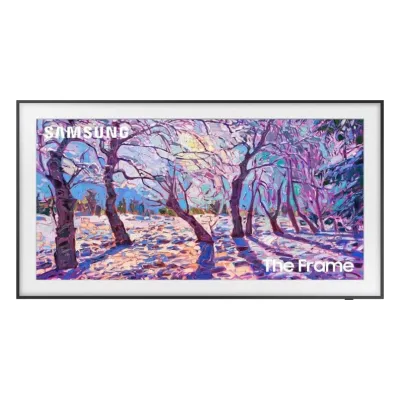
(NEW) Samsung 32″ Class QLED The Frame LS03C Series, Quantum HDR, Art Mode
$379.99 $597.99 up to 36% off
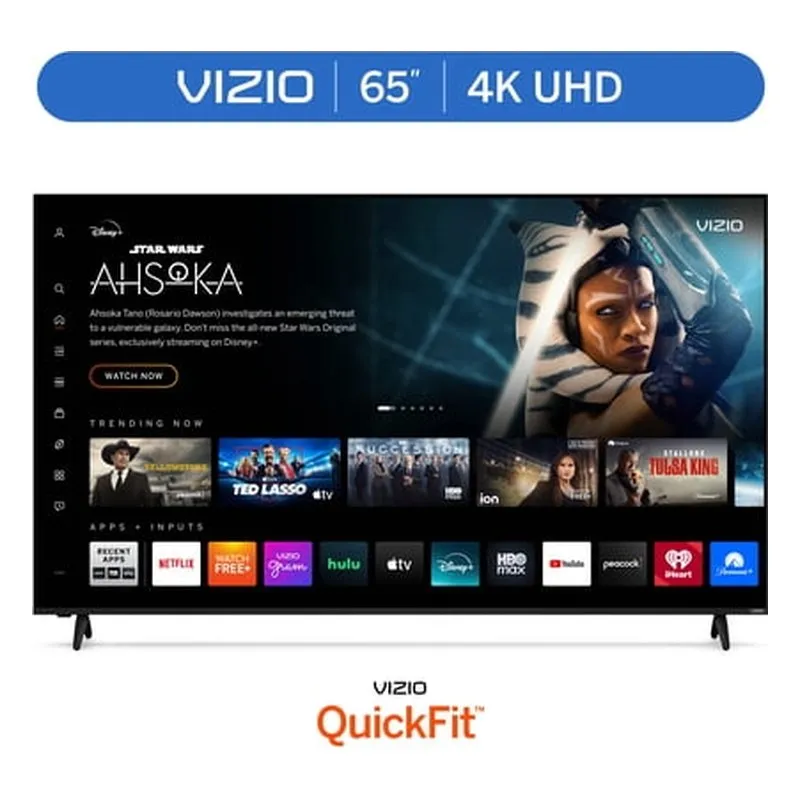
VIZIO 65 in Class 4K UHD LED HDR Smart TV, V4K65M-08 at Walmart
$228.00 $348.00 up to 34% off
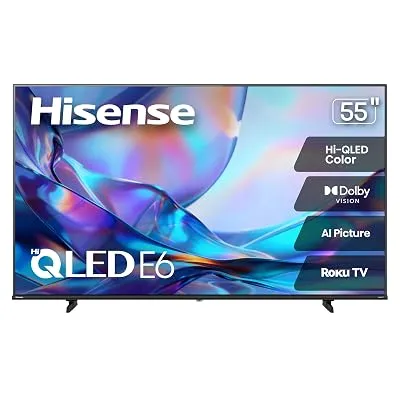
Hisense 55″ Class E6SR Series Hi-QLED 4K UHD Smart Roku TV
$279.99 $367.73 up to 24% off
See all Electronics deals, or get new deals as they drop on WhatsApp and Telegram.
More: read how to spot a fake Black Friday deal, see all Electronics deals, browse our other buying guides, or join our free alerts to hear about the next TV sale.
Key takeaways
- Mini-LED is the best-value TV tier in 2026, with much brighter highlights than basic LED or QLED.
- OLED gives perfect blacks and wide viewing angles but is dimmer than top Mini-LED sets in a sunny room.
- 2026 models end in H for Samsung, 6 for LG OLED and L for TCL, which helps you spot last year’s stock.
- A “Motion Rate” number is marketing; only the native refresh rate tells you if a panel is 120Hz.
Frequently asked questions
What size TV should I get?
Get a TV sized to your seating distance. About 55 inches suits 6 to 8 feet, 65 inches suits 8 to 10 feet, and 75 inches or more suits anything farther. Measure from your seat to the wall before you shop. If you are stuck between two sizes, most people end up happier with the bigger one, as long as it fits the stand or wall.
Is OLED worth it over Mini-LED?
OLED is worth it if you watch a lot of movies in a dim room and want perfect blacks and wide viewing angles. Mini-LED is the better pick for bright rooms, daytime sports and tighter budgets, because it gets brighter and costs much less at the same screen size. For most living rooms, Mini-LED is the better value.
Is Black Friday a good time to buy a TV?
Yes. Black Friday is one of the best times of year for TV prices, along with the weeks before the Super Bowl. Just check the exact model number before you buy, because some doorbuster TVs are cheaper versions made for big sales, with fewer HDMI 2.1 ports, fewer dimming zones or slower panels than the reviewed model.
Do I need a 120Hz TV?
You need a native 120Hz TV with HDMI 2.1 ports if you play on a PS5 or Xbox Series X and want smooth 120 frames per second. It also makes fast sports look smoother. For casual streaming of shows and movies, a 60Hz TV is fine. Check the spec sheet for the native rate, not a “Motion Rate” number.
Should I buy last year’s TV model?
Often yes. Last year’s model usually has a very similar picture and sells for much less while stores clear it out. It is a good deal as long as it costs clearly less than the new model and is still sold new with a full warranty. Check the model letters or numbers to confirm which year you are getting.
Do I need a soundbar?
You don’t need a soundbar on day one, but most thin TVs have weak speakers that make dialogue hard to follow. If you find yourself turning up the volume for voices or relying on captions, even a basic soundbar makes speech much clearer. You can add one later, so spend your budget on the TV first.